


Who Is Cornel West and Why Does His Voice Still Matter Today?
Cornel West is one of the most recognizable public intellectuals in modern American life. He is a philosopher, professor, author, political activist, cultural critic, and moral voice whose work has shaped conversations about race, democracy, justice, religion, poverty, love, and power. For many readers, the name Cornel West brings to mind passionate speeches, sharp political criticism, serious books, and a deeply personal style of public engagement.
What makes Cornel West different from many academics is that he has never limited his work to classrooms, journals, or elite institutions. He speaks in universities, churches, protest spaces, interviews, political programs, and public forums. His language often blends philosophy, theology, Black prophetic tradition, blues, jazz, literature, and political analysis. That combination has helped him reach audiences far beyond the academic world.
Cornel West is best known for his influential book Race Matters, his scholarship on African American life, his public criticism of injustice, and his long career as a professor at major institutions including Harvard, Princeton, and Union Theological Seminary. He is also widely known for his political activism and his independent presidential campaign during the 2024 election cycle.
This article explains who Cornel West is, why his work matters, what he has written, how his ideas developed, and why people continue to discuss him today.
Quick Facts About Cornel West
| Detail | Information |
| Full Name | Cornel Ronald West |
| Born | June 2, 1953 |
| Birthplace | Tulsa, Oklahoma, United States |
| Known For | Philosophy, public activism, books, race and democracy commentary |
| Major Book | Race Matters |
| Other Notable Work | Democracy Matters |
| Education | Harvard University, Princeton University |
| Main Fields | Philosophy, religion, African American studies, political thought |
| Public Identity | Philosopher, professor, author, activist, social critic |
| Political Role | Independent presidential candidate in 2024 |
| Current Public Image | A leading public intellectual and moral critic |
Quick answer: Cornel West is an American philosopher, author, professor, and activist known for speaking powerfully about race, democracy, justice, religion, poverty, and moral responsibility.
Who Is Cornel West?
Cornel West is an American thinker who has spent decades asking difficult questions about society. He is not simply a professor who writes books. He is a public intellectual who brings scholarship into public life. His career has included teaching, writing, political activism, religious reflection, media appearances, lectures, debates, and social criticism.
At the center of Cornel West’s work is a concern for human dignity. He often speaks about people who are ignored, pushed aside, exploited, or treated as invisible. His writing focuses on race, class, empire, democracy, spirituality, love, and the moral condition of society.
Many people know Cornel West because of his distinctive speaking style. He often uses phrases such as “brother,” “sister,” “truth,” “justice,” “love,” and “courage.” His public voice is emotional, intellectual, and spiritual at the same time. He can quote philosophers, blues musicians, religious leaders, poets, activists, and political theorists in the same conversation.
The key to understanding Cornel West is this: he believes ideas should not stay separate from real human suffering. For him, philosophy is not just abstract thinking. It is a way to confront injustice, search for truth, and live with moral seriousness.
Early Life and Family Background
Cornel West was born on June 2, 1953, in Tulsa, Oklahoma. He grew up in a family that valued education, faith, public service, and discipline. His early life helped shape the moral and spiritual tone that later became central to his public identity.
Although born in Oklahoma, West spent much of his youth in Sacramento, California. His upbringing exposed him to church life, Black community traditions, political struggle, and the importance of speaking up for dignity. He has often connected his intellectual journey to the Black church, the civil rights tradition, and the deeper cultural inheritance of African American communities.
His family background also mattered. West grew up with examples of hard work, care, and commitment. These influences helped him develop an early interest in justice and moral courage. He was not only interested in success; he was interested in meaning. That desire to understand meaning became one of the strongest themes in his later work.
As a young person, Cornel West was drawn to books, debate, and social questions. He became interested in how societies treat vulnerable people and why systems of power continue to create inequality. These questions followed him into college, graduate school, teaching, writing, and activism.
Education and Academic Foundation

Cornel West’s academic path is one of the most important parts of his biography. He attended Harvard University, where he studied with seriousness and distinction. He later earned graduate degrees in philosophy from Princeton University.
His education gave him a strong foundation in Western philosophy, political theory, religion, and social criticism. But West did not simply absorb academic traditions. He connected them with Black thought, Christian ethics, democratic struggle, and cultural criticism.
This is one reason his work stands out. Cornel West does not write as someone trapped inside one discipline. He draws from many intellectual worlds. His ideas include influences from philosophy, theology, literature, music, history, politics, and African American culture.
West’s academic journey helped him become a bridge between elite universities and everyday moral concerns. He could speak to scholars, but he could also speak to ordinary people who wanted to understand injustice, suffering, and hope.
His education also placed him in some of the most respected academic environments in the United States. Over the years, he has been associated with institutions such as Harvard, Princeton, Yale, Dartmouth, and Union Theological Seminary. These roles helped establish him as a major figure in American intellectual life.
Cornel West as a Professor and Public Intellectual
Cornel West has taught at several major universities and seminaries. His academic career includes work in philosophy, religion, African American studies, public philosophy, and political thought. He is especially associated with Princeton University, Harvard University, and Union Theological Seminary.
As a professor, West is known for his wide range of interests. He discusses classical philosophy, modern political thought, Black intellectual history, Christian theology, democratic theory, music, literature, and culture. His teaching style is often described as intense, passionate, and deeply personal.
But Cornel West’s influence does not come only from university teaching. His larger role is that of a public intellectual. A public intellectual is someone who uses serious learning to speak about public issues. West has done this for decades. He has written books for general readers, appeared on television, joined political discussions, supported social movements, and spoken at public events.
Cornel West’s public role is built on the belief that intellectual life should serve truth and justice. He does not see knowledge as something meant only for private achievement or professional status. Instead, he treats knowledge as a responsibility.
This is why he often speaks about courage. For West, it is not enough to know what is wrong. A person must also be willing to say what is wrong, even when it is unpopular.
Major Books by Cornel West
Cornel West has written and contributed to many books, but several stand out as especially important. His works cover race, democracy, philosophy, religion, ethics, culture, and politics.
Race Matters
Race Matters is the book most closely associated with Cornel West. Published in 1993, it became a major text in public discussions about race in the United States. The book examines racial injustice, Black leadership, poverty, nihilism, and the deeper moral crisis within American society.
The power of Race Matters comes from its directness. West does not treat race as a shallow political topic. He treats it as a deep human, moral, spiritual, and democratic issue. He argues that America cannot understand itself honestly without confronting race.
Democracy Matters
Democracy Matters is another major Cornel West book. It focuses on the condition of American democracy, the dangers of empire, and the need for moral courage in public life. The book continues many of the themes found in Race Matters, but it expands the discussion toward democracy and global power.
The Cornel West Reader
The Cornel West Reader collects important writings from different parts of his career. It is useful for readers who want a broad view of his intellectual development. The book includes his thoughts on philosophy, race, culture, religion, politics, and social criticism.
Prophesy Deliverance!
Prophesy Deliverance! is one of West’s earlier works and shows the development of his intellectual voice. It explores African American revolutionary Christianity and connects religious thought with liberation, justice, and political struggle.
Black Prophetic Fire
Black Prophetic Fire focuses on major Black leaders and freedom fighters. It examines figures such as Frederick Douglass, W. E. B. Du Bois, Martin Luther King Jr., Malcolm X, Ida B. Wells, and Ella Baker. The book shows West’s deep respect for the Black prophetic tradition.
The common thread in Cornel West’s books is a search for truth, justice, love, and democratic courage. His writing is not only about what society is, but also about what society could become.
Why Race Matters Became So Important
Race Matters became important because it arrived at a time when many Americans were trying to understand the country’s racial tensions in a deeper way. The book spoke directly to issues that were often discussed in political language but not always explored with moral depth.
Cornel West argued that race could not be reduced to simple slogans. He looked at poverty, despair, leadership, identity, culture, and structural injustice. He also discussed what he called nihilism, meaning a sense of hopelessness, meaninglessness, and lovelessness that can grow when people are constantly denied dignity and opportunity.
One reason Race Matters remains powerful is that it combines analysis with moral urgency. West does not write like a distant observer. He writes like someone emotionally and spiritually invested in the suffering of people.
The book also helped bring Cornel West into mainstream public conversation. It showed that a serious scholar could write for a wide audience without losing intellectual depth. Many readers discovered West through this book and then followed his work in politics, religion, philosophy, and activism.
Race Matters remains one of the most important modern books on race because it connects public policy, moral life, cultural pain, and democratic responsibility.
Cornel West’s Philosophy and Main Ideas
Cornel West’s philosophy is wide-ranging, but several core ideas appear again and again in his work.
Truth
West often speaks about truth as a moral obligation. For him, truth is not simply about facts. It is about honesty in the face of power. Telling the truth means naming injustice, hypocrisy, cruelty, and corruption even when doing so brings criticism.
Justice
Justice is central to Cornel West’s thinking. He is deeply concerned with how societies treat poor people, Black people, workers, prisoners, immigrants, and other vulnerable groups. He often argues that a society should be judged by how it treats those with the least power.
Love
Love may be the most distinctive part of West’s public philosophy. He does not use love only in a sentimental way. He connects love with action, sacrifice, courage, and justice. In his view, love means caring enough about people to fight for their dignity.
Democracy
West believes democracy must be more than voting. It must include participation, accountability, truth-telling, and concern for ordinary people. He often criticizes systems that allow money, corporate power, militarism, or elite interests to weaken democratic life.
The Black Prophetic Tradition
Cornel West often connects his work to the Black prophetic tradition. This tradition includes leaders, thinkers, artists, and activists who spoke against injustice while calling people toward freedom, courage, and moral renewal.
Moral Courage
West frequently argues that courage is necessary for serious public life. A person may have intelligence, education, or status, but without courage, those gifts can become empty. For West, moral courage means standing for truth even when it costs something.
Cornel West and Political Activism
Cornel West has been politically active for much of his public life. He has supported movements for racial justice, economic justice, peace, workers’ rights, prison reform, and democratic accountability. He has also criticized both major political parties in the United States.
West’s politics are often described as progressive, left-wing, democratic socialist, or radical democratic. However, he is not easy to place into one simple category. His politics are shaped by Christianity, Black freedom struggles, anti-poverty concerns, anti-war arguments, and a deep suspicion of concentrated power.
He has criticized racism, capitalism, militarism, imperial power, corporate influence, and political hypocrisy. At different times, he has supported or advised political figures, but he has also become sharply critical when he believes leaders have failed to serve justice.
Cornel West’s activism is closely connected to his philosophy. He does not separate thinking from action. For him, public ideas should lead to public responsibility.
This is why his supporters admire him. They see him as someone willing to challenge powerful people and institutions. His critics, however, sometimes argue that his political judgments are too confrontational or too idealistic. That tension has followed him throughout his career.
Cornel West’s 2024 Presidential Campaign
Cornel West gained renewed national attention when he entered the 2024 United States presidential race. His campaign began outside the two major political parties and went through several stages, including third-party and independent efforts.
The campaign reflected many of West’s long-standing concerns. He spoke about poverty, healthcare, war, housing, workers, racial justice, climate, corporate power, and the influence of money in politics. His message was built around the idea that the United States needed a deeper moral and democratic transformation.
For supporters, the campaign represented a challenge to politics as usual. They saw West as a candidate willing to speak about issues that major parties often avoid or soften. For critics, the campaign raised concerns about third-party influence, ballot access, political strategy, and whether his run could affect the outcome between major-party candidates.
Whether people supported or opposed the campaign, it brought Cornel West back into the center of national political discussion. It also showed how his public identity had expanded beyond academia. He was not only a philosopher and author; he had become a direct political actor.
The 2024 campaign did not define Cornel West’s entire career, but it became an important chapter in his public life. It connected his decades of criticism into an electoral movement, even if that movement faced major practical challenges.
Cornel West in Media, Culture, and Public Debate
Cornel West has appeared across many forms of media. He has been interviewed on television, featured in documentaries, invited to public debates, and included in cultural discussions. He has also appeared in popular culture, including film-related projects and music collaborations.
His presence in media matters because it shows his unusual range. Many professors are known mainly in universities. Cornel West became known among students, activists, religious audiences, political viewers, readers, and people interested in culture.
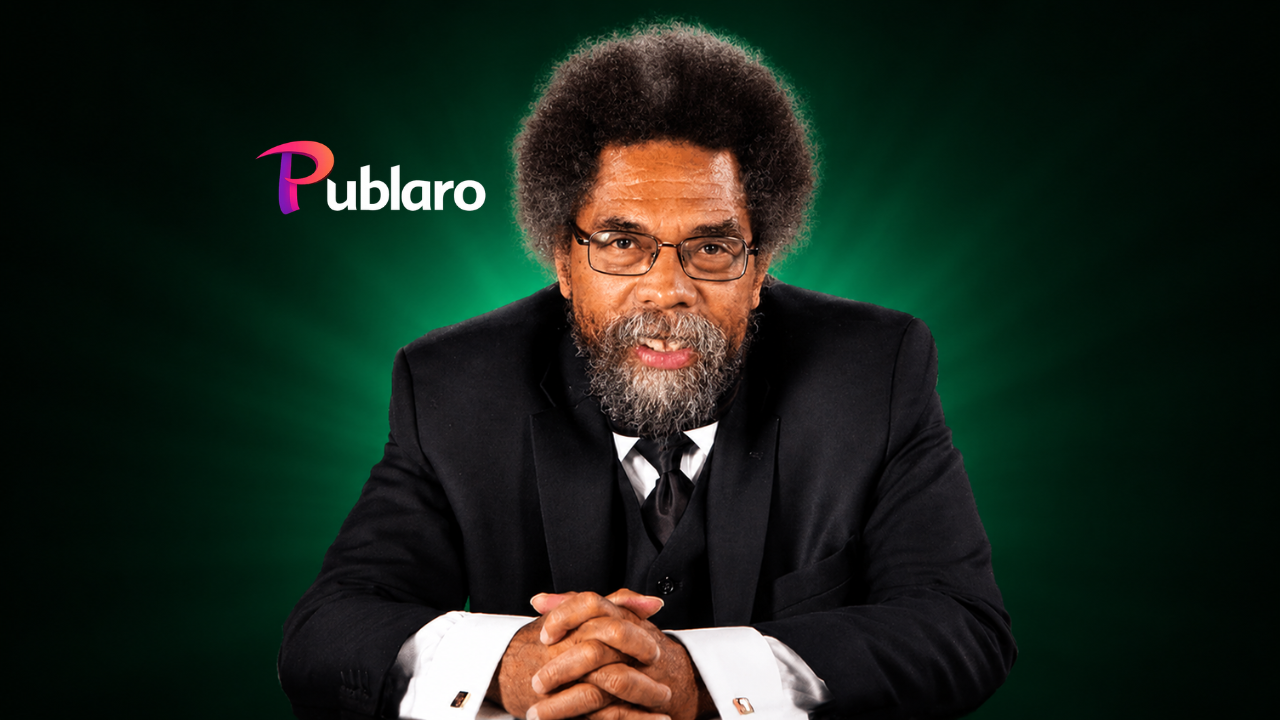
His style also made him memorable. He is known for his black suit, scarf, expressive speech, and intense moral vocabulary. He often speaks with rhythm and passion, drawing from the traditions of preaching, jazz, blues, philosophy, and political speech.
This public style has helped him build a strong following. At the same time, it has made him a controversial figure. Some people admire his passion and moral clarity. Others believe his style can be too dramatic or his criticism too sweeping.
That debate is part of why he remains relevant. Cornel West is not a quiet background figure. He provokes reaction. He asks uncomfortable questions. He challenges readers and listeners to think about whether society is living up to its highest ideals.
Why Cornel West Remains Important Today
Cornel West remains important because many of the issues he has discussed for decades are still central today. Race, inequality, democracy, poverty, public truth, political corruption, war, and moral courage continue to shape public life.
His work also matters because he connects intellectual seriousness with human feeling. He does not treat suffering as data only. He speaks about grief, despair, hope, love, and dignity. That emotional and spiritual dimension gives his work a unique power.
In a time when public debate is often fast, shallow, and angry, Cornel West represents a different kind of voice. He can be fiery, but he is also deeply rooted in books, traditions, and history. He reminds readers that public life is not only about winning arguments. It is also about asking what kind of people we are becoming.
Cornel West matters because he forces people to ask moral questions, not just political ones. What does justice require? What does democracy mean? How should people treat the poor? What does courage look like? What happens when a society loses truth? These questions are not temporary. They remain urgent.
His influence can be seen in classrooms, churches, activist spaces, political debates, and public conversations about race and democracy. Even when people disagree with him, they often recognize that he has shaped the way Americans talk about justice.
Cornel West’s Legacy as a Thinker
The legacy of Cornel West is still being written, but several parts are already clear. He helped make serious discussions about race and democracy more accessible to general readers. He expanded the role of the public intellectual. He brought together philosophy, theology, music, politics, and Black cultural tradition in a distinctive way.
He also showed that scholarship does not have to be emotionally cold. His work is full of feeling, grief, anger, hope, and love. That makes his writing and speaking different from standard academic commentary.
Cornel West’s legacy is not without controversy. His political choices, public criticisms, and strong language have often produced disagreement. But controversy does not erase significance. In fact, it is part of why he remains a major public figure.
A fair understanding of Cornel West must include both admiration and debate. He is a respected scholar, a passionate activist, a bestselling author, a moral critic, and a controversial political voice. That complexity is exactly why people continue searching for his name.
Conclusion
Cornel West is one of the most important American public intellectuals of his generation. His life and work bring together philosophy, religion, politics, African American studies, music, literature, and activism. He is known for speaking with passion, challenging powerful institutions, and asking society to take truth, justice, love, and courage seriously.
The keyword cornel west represents more than a person’s name. It points to a long public career built around moral struggle and intellectual engagement. From Race Matters to his university teaching, from public speeches to political activism, West has remained committed to questions that shape the heart of democratic life.
Cornel West’s importance comes from his refusal to separate ideas from suffering, scholarship from justice, or truth from courage. Whether readers agree with all of his views or not, his influence on American thought, race discussions, democratic criticism, and public philosophy is undeniable.
If you want to understand modern debates about race, democracy, public morality, and intellectual responsibility, Cornel West is a figure worth studying carefully.
FAQs
Who is Cornel West?
Cornel West is an American philosopher, professor, author, political activist, and public intellectual. He is best known for his work on race, democracy, justice, religion, and social criticism.
What is Cornel West known for?
Cornel West is known for his book Race Matters, his teaching at major universities, his public speeches, his activism, and his criticism of racism, poverty, militarism, and political injustice.
How old is Cornel West?
Cornel West was born on June 2, 1953. As of June 2026, he is 73 years old.
What are Cornel West’s most famous books?
Cornel West’s most famous books include Race Matters, Democracy Matters, The Cornel West Reader, Prophesy Deliverance!, and Black Prophetic Fire.
Did Cornel West run for president?
Yes. Cornel West ran as an independent presidential candidate during the 2024 United States election cycle after initially being connected with third-party efforts.
What does Cornel West teach?
Cornel West teaches and writes on philosophy, religion, African American critical thought, democracy, politics, culture, literature, and moral life. His work often connects academic ideas with public justice.
If you like this blog, read more about “different blog”
Updated Report: June 2026
Publaro.co.uk